After participating in the 1962 Indo-China war and retiring from the Indian Army, Mr. K Madhavan Nair returned home and found out that during the 1955 flood, when Kanyakumari was part of the Travancore-Cochin State, this sacred grove (kavu) was buried under mud, and the temple idols had disappeared. In 1962 itself, Mr K Madhavan Nair recovered the naga idols that were buried in the mud and reinstalled them for the well-being of his family. The father of Rameshan Potti, who is the current priest of the Thenguvila Nagar Kavu Trust at Thiruvarambu, was Narayanan Potti, who used to perform aayilya poojas for this grove at that time.
After 11 years of continuous worship, Mr. K Madhavan Nair moved to Nagercoil for his children’s education, and due to the lack of successors to oversee the rituals, the poojas once again came to a halt.
On 16th April 2000, Dr. S Subhash Chandran, who married the eldest daughter of Mrs. Padminiyamma – late Mr. Gopinathan Nair of Thenguvila, became a member of this family. Following this, as per the instructions of Mr. B Pankajakshan Nair, the head of this family, Mr. Attur Gireeshan Potti conducted the ‘Tamboola Prashnam’ (a traditional astrological ritual) at the residence of Mrs. Padminiamma, wife of Thenguvila Mr. Gopinathan Nair and sister of elder co-founder of the Trust Mr. B Pankajakshan Nair. Through this, the more than 300-year- old history of the Nagar Kavu was traced.
In 2002, the sacred grove was renovated and annual rituals were initiated by Mr. H Sadanandan Potti as the temple Tantri (chief priest). Since then, Mr. Rameshan Potti has been serving as the temple priest at Thiruvarambu for the past 23 years.
Mr. Pradeep Namboothiri, a disciple of the renowned Kerala Vastu expert Mr. Kanippayyannur, who lived in the Agraharam near Suchindram Temple, invoked and consecrated the deities such as Vanasastha, Ganapati, Bhadra, Durga, and Eeshwara Kalabhoothathan beneath the sacred grove and along with Dr. S Subhash Chandran, they both set out the temple area as per the traditional Anguliya measurements. Dr. S Subhash Chandran took responsibility and brought in sculptors to build the temple. The solutions to the issues revealed through the ‘Tamboola Vidhi’ were orally dictated by Mr. Gireeshan Potti, and Dr. S Subhash Chandran was fortunate to note them down in his presence.
With the support of today’s forum members, family members, founders, and co-founders of this family, the temple construction was completed, and in 2002, the temple renovation was accomplished, marking the first annual ritual thereafter.
- Late Mr. K Madhavan Nair: 1962 - 1973 (1st temple restoration)
- Late Mr. K Sukumaran Nair: 2002 - 2023 (Temple renovation)
- Late Mr. C Gopinathan Nair: 2002 - 2014 (Temple renovation)
- Dr S Subhash Chandran: 2002 – 2025
- Mr. T Shajing: 2002 - onwards
- Mr. K P Chandran: 2015 - 2025
- Founder, Mr. S Ramanarayanapilla: 2018 - 2024
- Elder Co-Founder, B Pankajakshan Nair: 2002 - onwards
- Younger Co-Founder, B Vijayakumaran Nair: 2002 - onwards
- Family members of the temple: 2002 onwards
- Trust director board members and executive members 2018 - onwards
This sacred grove, jointly dedicated to Vasuki and Ananthan, is believed to be more than 300 years old. It is known as the family temple of the Thenguvila family. The sacred grove is collectively owned by about seven families and spreads across 14 acres and 76 cents, which can still be verified through the Tamil Nadu Land Revenue records and the 1952 deed documents.
This sacred grove is in the serene and scenic village of Thiruvarambu, about five kilometers from the famous Adikesava Temple lands in Thiruvattar village, Kanyakumari district, Tamil Nadu. A unique feature of this sacred grove is that two serpent deities—Vasuki and Ananthan— are worshipped together in a single sacred grove. I believe such sacred groves, where both these serpent deities are worshipped side by side, are extremely rare. The sacred grove continues to exist within the region of Kanyakumari district, where linguistic minorities reside.
Vasuki is known in Hinduism as the serpent of Lord Shiva. He is revered as the king of the Nagas (serpents) and is depicted coiled around Lord Shiva’s neck. Ananthan is known as the serpent of Lord Vishnu. The name Anantha symbolizes infinity. In Hindu mythology, Anantha is considered the divine bed on which Lord Vishnu reclines—known as Anantha Shayanam.
It is noted in reports by both Central and State Governments that serpent sacred groves play a crucial role in removing ‘Kaalasarpa Dosha’ and ‘Vastu Dosha’—traditional astrological and architectural imbalances—thus contributing significantly to the community and the environment by fostering health, prosperity, and peace. Therefore, serpent sacred groves have always been considered vital for ecological studies.
This sacred grove still exists on a piece of land recorded as ‘Kaavuvilapurayidam’ (sacred grove premises) in old government records, covering an area of about five cents.
In front of this sacred grove stand shrines dedicated to deities like Vanashastha, Durga, Bhadra, Ganapathi, and Eeshwarakala Bhoothathan. These shrines, covering about 2.5 cents of land, face a pond. Worshippers enter the sacred grove through a side pathway beside these shrines. Altogether, the sacred grove and temple cover around 7.5 cents.
Such sacred groves are considered a divine blessing because they arise naturally from the coexistence of humans and nature. This is why sacred groves are declared protected forests by State and Central Governments and safeguarded under the Environment Act and Indian Forest Acts.
Three hundred years ago, when people depended solely on agriculture for their livelihood, these deities were worshipped as protectors of the fields, guarding crops from wild animals and other threats. Over time, as agriculture declined, the knowledge about the importance of these guardian deities faded. Consequently, the upkeep of the sacred grove and the shrines dwindled, rituals stopped, and the sanctity of the place deteriorated, leaving behind only remnants of the temple and sacred grove.
This neglect has impacted the family’s living standards and economic progress for generations, leaving successors without any significant growth. In this situation, the elder patriarch B Pankajakshan Nair and the younger patriarch B Vijayakumaran Nair took the initiative—along with financial contributions from about seven families (THENGUVILAI VEEDU, Thiruvarambu. ARAPPURAYAM VEEDU, Thiruvarambu. KARAVADA, Muzhucode KAKKALUVEEDU, Thiruvarambu, POTTAYIL VEEDU, Thiruvarambu, VALVACHAKOSHTAM VEEDU, PONMANA & ANDUCODU) and under the guidance of the late Mr Gopinathan Nair (who married into the family) and the late Mr Sukumaran Nair of the Arappuraveedu family—to revive the temple.
Like every temple with a legend, this more-than-300-year-old sacred grove and its surrounding ecosystem also carry a tale for today’s generation.
Three generations ago, a woman in the family is believed to have given birth to both a human child and a serpent, symbolizing divine abundance in agriculture and prosperity. During harvest time, when paddy and other crops were laid out, the serpent would crawl through the grains, and the harvest would be equally shared between the family’s needs and the serpent’s portion, which would then be offered as charity to the community. This story reminds us of an ancient era when nature and humans lived in deep, harmonious coexistence.
I, Dr. S Subhash Chandran, undertook the renovation in 2002, continuing efforts until the Thenguvila Nagar Kavu Trust was officially formed in 2018 to protect the temple. I consider this to be part of my destiny and a means to absolve past karmic debts from previous lives. At the same time, I believe this mission should bring significant societal change by promoting agriculture, ecological awareness, and protecting farmers—raising consciousness about the declining state of agriculture in India and passing this awareness to future generations. In line with this vision, I established the FCICT Trust as its Founder cum Chairman, seeing it as a legacy yet to unfold fully.
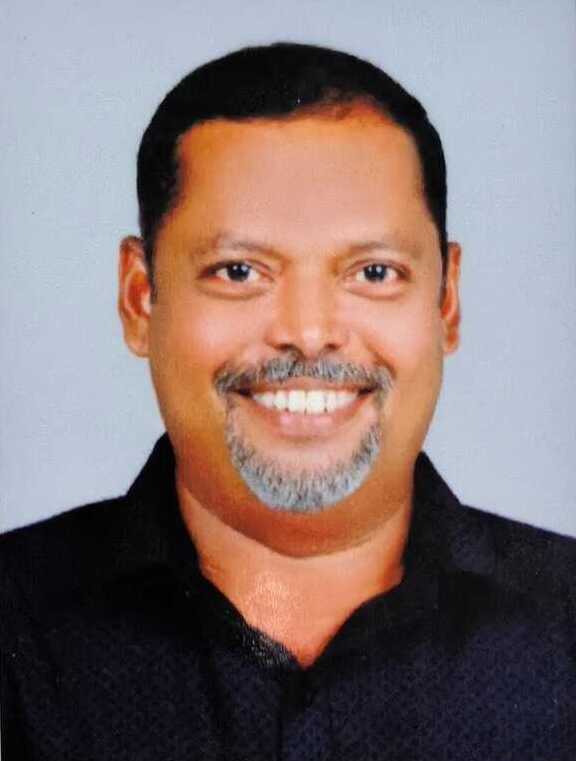
Dr S SUBHASH CHANDRAN
.jpeg)
Mr. K P CHANDRAN
As part of the Government of India’s declaration of Nagar Kavus (serpent groves) as protected forests, these sacred groves are now included under the Protected Forest Law (1972 Wildlife Protection Act, Section 36-C).
Sacred groves (Kavus) fall within the definitions of forests, ponds, rivers, and wildlife, which are all vital for environmental preservation and balance. Therefore, it is both the Government’s and the citizens’ responsibility to protect these groves.
The energies emitted from these groves, such as cosmic energy, and the influence of the grove also help maintain local water availability and support habitats for birds and reptiles. Hence, Kavus fall within the scope of the Environment Act and must undergo ecological surveys.
Accordingly, the responsibility to protect these protected forests and their associated activities lies with the respective State Governments.
Under this law, if any activities partially or fully damage these groves, it is considered a violation of fundamental rights, and any individual or institution can approach the court under Article 51A(g) to restore the lost fundamental right.
There is a need for a nationwide survey of Sacred groves under the guidance of the ministry of environment forest and climate change
- The survey must identify the area and extend of the groves
- The court recommended protection of Sacred groves under the Wildlife Protection Act 1972 particularly through section 36 c which enables the declaration of community reserves
- The preservation of these groves was seen as critical for maintaining biodiversity and safeguarding the cultural heritage of entire communities
After the 23rd annual day of the Thenguvila Nagar Kavu on 7th July 2025, FCICT Founder cum Chairman Dr. S. Subhash Chandran, who resigned from the Thenguvila Nagar Kavu Trust as its Vice President, together with K. P. Chandran, who was the Secretary of the same Trust, took the first step towards forming a protection council for Thenguvila Naagar Kavu groves by creating a website (www.tnkt.in) on 29th July 2025, which was Naga Panchami day
At present, this is only an unregistered, two-member committee formed on 27th July 2025 under the trust FCICT exclusively for the protection of Thenguvila family’s sacred grove.
The main aims of this council are:
- To protect existing groves and conserve them as protected forests in collaboration with the Forest, Archaeology Department and other relevant environmental departments.
- To create awareness among communities about their responsibility to protect the environment.
- To form a collective network of people working for the conservation of groves